Luxury Without Compromise: The New Covenant Between High-End Island Resorts and the Natural World
Let us dispense with the most persistent misconception in contemporary travel: that sustainability and luxury occupy opposite ends of a spectrum, and that movement toward one necessarily entails retreat from the other. This framing is not merely inaccurate — it is increasingly obsolete. The island resorts that are defining the highest standards of guest experience in 2025 are, in a striking number of cases, the same properties leading the industry in environmental conservation, renewable energy adoption, and marine ecosystem protection.
This convergence is not accidental, and it is not purely ideological. It reflects a sophisticated understanding of what luxury island travel fundamentally is: an encounter with natural environments of exceptional beauty and vitality. To degrade those environments in the course of serving guests is, ultimately, to destroy the very product being sold. The most forward-thinking operators in the industry understood this years ago. The rest are now catching up with some urgency.
The Demand Signal From American Travelers
The shift in guest expectations among affluent American travelers has been both rapid and consequential. Research conducted by luxury travel industry bodies consistently shows that environmental credentials have moved from a peripheral consideration to a significant factor in property selection among high-net-worth US travelers — particularly those under 55. This is not a matter of performative virtue; it reflects a genuine evolution in how this demographic conceptualizes the value of a vacation.
For many of these travelers, the awareness of ecological fragility is not abstract. They have witnessed coral bleaching on reefs they visited a decade ago. They have read about the acceleration of coastal erosion on islands they intend to visit with their children. The desire for what the industry has taken to calling "guilt-free luxury" — the ability to inhabit a beautiful natural environment without contributing to its diminishment — is a deeply felt aspiration, and the resorts that address it authentically are earning fierce loyalty as a result.
Soneva Fushi: The Benchmark in the Maldives
Any serious examination of sustainable luxury island hospitality must contend with Soneva Fushi in the Baa Atoll, a property that has functioned as both pioneer and benchmark for more than two decades. The resort's commitment to environmental stewardship is structural rather than cosmetic — woven into its operational architecture rather than applied as a marketing veneer.
Soneva Fushi generates a significant portion of its electricity from solar power, operates a waste management system that diverts the overwhelming majority of its refuse from landfill through recycling and composting, and has invested heavily in a coral restoration program that has successfully transplanted thousands of coral fragments onto degraded reef structures within its marine area. Crucially, none of these initiatives have required the resort to compromise on the extraordinary standards of comfort and design for which it is celebrated.
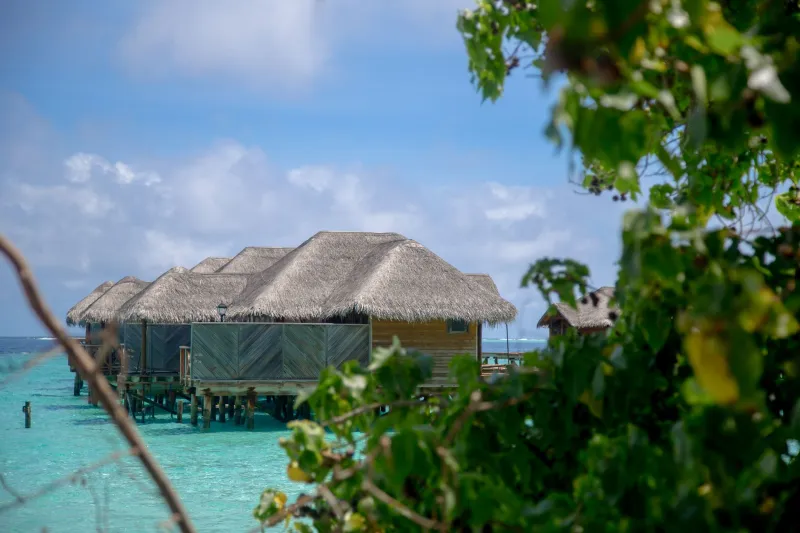
Guests sleep in sprawling thatched villas that open directly onto the Indian Ocean. They dine at a restaurant perched above the water, consuming meals prepared with ingredients sourced as locally as the constraints of atoll geography allow. They receive the kind of anticipatory, deeply personalized service that defines genuine luxury hospitality. The sustainability framework is not a constraint within which these experiences occur — it is the foundation upon which their quality rests.
North Island, Seychelles: Conservation as Amenity
North Island in the Seychelles offers perhaps the most instructive case study in the reframing of conservation as a luxury amenity rather than a luxury compromise. The island was purchased in the 1990s in a severely degraded ecological state, with invasive species having eliminated much of the native flora and fauna that had characterized it historically.
The subsequent restoration program — spanning more than two decades and requiring investment on a scale that would be implausible for any operator not simultaneously committed to delivering world-class luxury — has transformed North Island into one of the most ecologically significant private islands in the Indian Ocean. Endemic Seychelles species, including the Aldabra giant tortoise and several critically endangered bird species, now inhabit an island that has been largely returned to its pre-colonial condition.
For guests — who stay in eleven spectacularly appointed villas at rates that position the property among the most exclusive in the world — this restoration is not a background fact. It is a central dimension of the experience. Guided conservation walks, participation in turtle monitoring programs, and encounters with wildlife that exists nowhere else on Earth are experiences of a quality that no amount of marble and thread count can replicate. The conservation program is, in the most literal sense, the property's most extraordinary amenity.
Renewable Energy and the Operational Revolution
Beyond the headline-generating conservation programs, a quieter but equally significant revolution is underway in the operational infrastructure of luxury island resorts. The shift toward renewable energy generation — driven by a combination of environmental commitment, energy security concerns, and the improving economics of solar and wind technology — is transforming the carbon profiles of properties across the Indian Ocean, the Caribbean, and the Pacific.
Six Senses properties, which operate across multiple island destinations including the Maldives and Fiji, have established group-wide targets for renewable energy adoption that are among the most ambitious in the hospitality sector. The Brando in French Polynesia — situated on the private atoll of Tetiaroa, once owned by Marlon Brando — operates on a near-zero-carbon basis through a combination of solar generation and an innovative coconut oil biofuel system. The property's environmental performance has not prevented it from maintaining one of the most rarefied luxury reputations in the Pacific.
The Authenticity Imperative
It would be remiss to conclude without acknowledging the significant problem of greenwashing that afflicts portions of the hospitality industry. The growing commercial value of environmental credentials has inevitably attracted operators willing to deploy the language of sustainability without the substance. For the discerning traveler, the ability to distinguish genuine commitment from performative gesture is an essential skill.
Several reliable indicators of authentic environmental leadership exist. Third-party certifications from rigorous bodies — including EarthCheck, Rainforest Alliance, and the Global Sustainable Tourism Council — provide a meaningful baseline. The presence of dedicated conservation staff, rather than sustainability messaging confined to the marketing department, is a telling signal. And the willingness of a property to publish specific, verifiable data on its energy consumption, water usage, and waste diversion rates suggests a confidence in its own performance that greenwashing rarely sustains.
The most authentic sustainable luxury properties share a quality that is ultimately experiential rather than statistical: a sense that the natural environment surrounding the resort is genuinely treasured by those who operate within it. That quality — of care, of genuine reverence for the natural world — is perceptible to guests in ways that are difficult to articulate but impossible to mistake. It is, in the end, the same quality that makes certain island destinations feel sacred rather than merely beautiful. And it is, we would argue, the highest expression of what luxury island travel can aspire to be.