Beyond the Usual Blue: A Practical Guide to the Middle East's Emerging Island Escapes for American Travelers
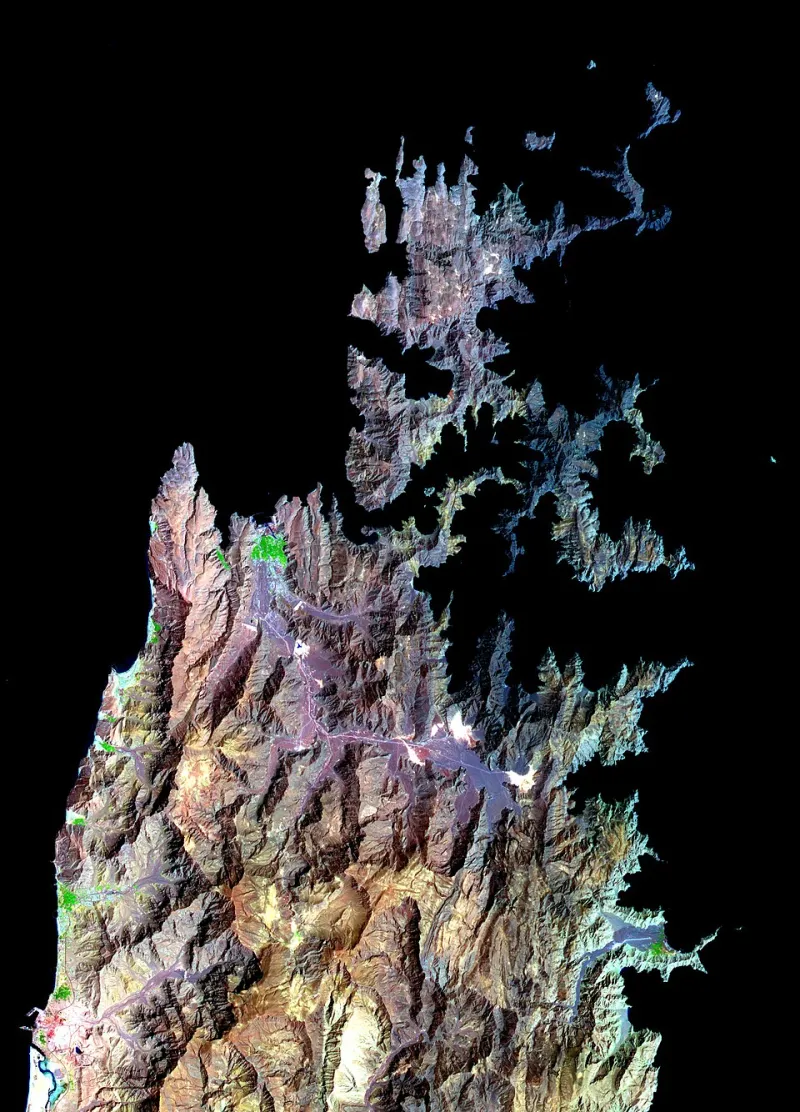
Photo: Image courtesy NASA/GSFC/METI/ERSDAC/JAROS and the U.S./Japan ASTER Science Team., Public domain, via Wikimedia Commons
For decades, the American luxury traveler's island shortlist has been geographically predictable: the Caribbean in winter, Hawaii in summer, the Maldives if the occasion justified fourteen hours in the air. That map is quietly being redrawn. A growing share of US travelers — particularly those who have done St. Barts, Anguilla, and the Amalfi coast twice over — are setting their sights on the Arabian Peninsula's littoral, where a trio of destinations offers something the Caribbean increasingly cannot: novelty without compromise.
Oman: The Daymaniyats and the Muscat Coast
Oman is the region's most accessible entry point, both logistically and temperamentally. The country is famously stable, famously hospitable, and — critically for the island-minded — home to the Daymaniyat Islands Nature Reserve, an archipelago of nine uninhabited islands whose coral gardens and turtle nesting beaches are protected by a strict permit system.
Getting there: A single connection through Dubai (Emirates) or Doha (Qatar Airways) delivers travelers to Muscat from most major US gateways in roughly 18–20 hours of total travel. Direct New York–Doha and Chicago–Doha flights make the routing painless.
Visa basics: US citizens obtain an Omani eVisa online in advance; processing typically takes a few days and the tourist visa permits stays of up to 30 days.
When to go: October through April offers dry, warm weather with sea temperatures ideal for snorkeling. The Daymaniyat reserve is closed or restricted during the summer turtle nesting season.
The experience: Day-charter speedboats from the Al Sawadi coast or Muscat marinas deliver guests to sites with names like Aquarium and Coral Garden — and the names are earned. Pair the water time with Muscat's boutique hotels, the Al Hajar foothills' resort retreats, and the muttrah souq's unhurried commerce.
Saudi Arabia's Red Sea: The New Frontier
The Kingdom's northwestern coast represents the most ambitious luxury tourism development on Earth, anchored by the Red Sea Global portfolio — resorts on previously undeveloped islands and reefs reachable largely by private transfer.
Getting there: Red Sea International Airport now receives regional connections; most US itineraries route through Riyadh or Jeddah via a one-stop connection.
Visa basics: The Saudi eVisa is available to US citizens online and on arrival for eligible travelers; requirements should be confirmed close to booking, as the framework continues to evolve.
When to go: October through April, mirroring Oman's season, with winter offering the region's most comfortable conditions.
The draw: Pristine, largely untouched reef systems with visitor counts that new-build infrastructure keeps deliberately low. This is luxury travel at its most engineered — and its least crowded.
Musandam: The Fjords of Arabia
Oman's Musandam Peninsula, an exclave separated from the main country and reachable via Dubai, offers a radically different aesthetic: dramatic khors (rock-walled inlets) best explored by traditional dhow or private yacht, with dolphin pods, small fishing villages, and water that is more Norway than Polynesia.
The logistics: Fly into Dubai, then transfer by road (roughly two to three hours, including border formalities) or join a chartered departure. US citizens can obtain Oman visas on arrival at the Musandam border crossing, though confirming current requirements before travel is essential.
How the Math Compares
Set against the Caribbean, the Arabian alternative trades convenience for distinction. Peak-season nightly rates at Oman's and the Red Sea's top properties remain below those of St. Barts or the Turks and Caicos' flagship resorts, often by 20 to 40 percent. Flight time is the honest cost: 18 to 20 hours versus four from the US East Coast. But the traveler who makes the journey receives in exchange reefs without crowds, cultures unshaped by mass tourism, and the rarest luxury of all — the sense of having arrived somewhere genuinely new.
For the winter of 2026, the savviest American itineraries are already being built around it.